Tuesday, October 26, 2010

Two Witnesses for the Eucharist


 (This is my letter from last week's bulletin that I forgot to post)


In the month of October we celebrate two feast days that point us to the importance of the Eucharist in the life of the Church.  On the 17th we celebrated the memorial of St. Ignatius of Antioch, and on the 19thwas the feast of the North American Martyrs.

Ignatius was the bishop Antioch, in modern day Turkey, who was arrested and sent to Rome to suffer martyrdom around the year 110 AD.  Rather than taking a direct rout to Italy, the ship carrying him sailed close to shore and made many stops along the way.  This was not so unusual, since sea travel was dangerous and hugging the coast was the norm, but that he was greeted by so many while at port was a bit out of the ordinary.  While these friends could have secured his freedom by way of bribes, he begged them not to interfere with what he saw as his mission to witness to Christ with is life.  He also wrote numerous letters to the various Christian communities.  In them he urged unity with their local bishops, especially in the celebration of the Eucharist.  He stressed that the Eucharist is the “flesh of our Savior Jesus Christ,” and that the faithful should avoid teachers who taught otherwise.

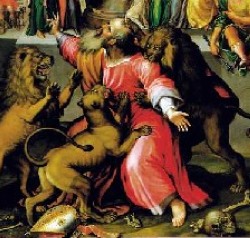
St. Isaac Jogues (1607-1646) was a French Jesuit who went to North America as a missionary to spread the Gospel to the indigenous peoples of what is today northern New York State and Canada.  He is remembered along with eight others who gave their lives to spread the Good News in the New World.  He was captured by a band of Iroquois Indians, and during his captivity was viciously tortured.  His captors may not have known much about the Faith, but they knew enough about the Mass to bite off several of St. Isaac’s fingers.  At that time a priest could only hold the consecrated host with his thumb and index finger, and with out then he was not allowed to offer the Mass.  Eventually St. Isaac escaped, with the help of some Protestant merchants, and returned to Europe.  Pope Urban VII granted St. Isaac permission to offer the Eucharist in spite of his injuries because “it would be unjust that a martyr of Christ should not drink the Blood of Christ.”  Isaac returned to North America and suffered martyrdom a short time later.  He went to his death with strong faith in the Gospel he preached and the sacraments that he celebrated and suffered so greatly for.

In the case of both these saints we see a great love of Christ, and a great love of the Sacrament of unity that is Christ’s Body and Blood.  Sts Ignatius and Isaac died centuries apart and in vastly different places.  But both died believing the same thing: That Christ is truly present in the Eucharist to unite us and help us grow in charity, and that this gift needs to be spread.  Let us renew our love of this sacrament and faith in Our Lord’s True Presence in it.

Monday, October 25, 2010

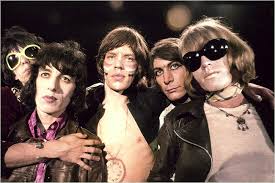
The Beatles, the Rolling Stones and the Spirit of the 1960's

In my last post on the legacy of  the Beatles I wrote about how they were true revolutionaries in a more profound way than many of their contemporaries, and one contemporary in particular.  The Rolling Stones are usually held up as the "bad boys" of Rock, contrasted with the Beatles as our lovable Mop Tops. The Stones' reputation wasn't unearned, to be sure, but the wrap on them is that this was an image carefully engineered by their first manager Andrew Loog Oldham.  Bill Wyman, their former bassist and diarist who kept a detailed journal of the band's exploits for decades, has contested that their image was real, but exploited by their handlers in a way the group itself didn't necessarily like.

Though this proposed dualism between the two bands has become a cliche, it doesn't change the fact that there is truth contained in it.  In a bigger sense The Beatles and Stones can be seen as both ends of a struggle to find the true meaning of the late Sixties.  The pop music of the day reflects the dualism embodied by the two groups.  There is Utopian optimism in songs like "The Age of Aquarius/ Let the Sun Shine In" by The 5th Dimension and Friend and Lover's "Reach Out in the Darkness," but also discontent reflected in Buffalo Springfield's "For What It's Worth," Barry McGuire's "Eve of Destruction," and just about anything by The Doors.  Donovan's "Hurdy Gurdy Man" represents a strange hybrid of hippie idealism in its lyrics but an ominous, spooky quality to it's arrangement that points to something darker just beneath the surface (the song was used to masterful effect in David Fincher's movie "Zodiac" a few years ago).

There is a romanticism associated with the age that endures that wasn't lost on the people living through it.  Jim Morrison predicted that in decades to follow the late 60's would be seen in the same romantic light as the French Revolution period.  What has indeed endured in the popular mind is the idealized image of flowers in your hair, free love and anti-war protests.  But read Hunter Thompson's "Fear and Loathing in Las Vegas," written in 1971, and we can see that there is already a sense that the 60's generation failed. What struck me reading the book was that Thompson, who from our vantage point almost 40 years later is right in the middle of it all, seems to write of the period as if it was some long gone era.  The Who's LP "Who's Next" from the same year also points to a lost idealism in the two anthemic numbers that bookend the album.  David Bowie's "All the Young Dudes," made famous by Mott the Hoople in 1972, states:

And my brother's back at home
With his Beatles and his Stones
We never got it off on that revolution stuff 

What a drag, too many snags

Why the pessimism? The spirit of the youth movement of the late 60's was rebellion, in the sense of reexamining the values and mores that held sway and setting about to change them.  We can look at the Civil Rights Movement as effecting a positive change in that era, but the rebellion extended to every aspect of life.  Mixed up with all this is the Sexual Revolution and the rise of a drug culture that thought it could bring spiritual enlightenment through chemical means.  All this was part of a rebellion against the status quo.  But who is the master of rebellion?  It is Lucifer, of course.

I'm not suggesting that all revolution is the product of the Evil One, but its undeniable that there was a flirtation with the dark side, if you will, especially by the Rolling Stones, during this era.  I am not one who believes that Mick Jagger sold his soul for Rock and Roll.  Like I wrote above, the Stone's image was carefully crafted, and I have no problem believing that it was all a part of the act.  But when we play with these forces, even cynically, bad things happen.  It is often pointed out by those who try to deny the satanic connection with the Stones that when Meredith Hunter, an 18 year old concert goer, was murdered at the infamous Altamont free concert the song being played was "Under My Thumb," not "Sympathy for the Devil," as legend has it. This is true but it misses the point (not that I think "Under My Thumb" has such great karma attached to it either).  As Stephen Davis' bio of the band states, 1969 was a "witchy time," with tarot readings and seances being in vogue.  How deep the Stones or anyone in the counter culture were involved in such occult activities is open to debate.  But once that door is opened, even a little, it becomes hard to close.  What ever positive changes were being fought for were undermined by the presence of the "smoke of Satan," to borrow a phrase form Paul VI.  It was this connection with the forces of darkness that ultimately undid the 60's dream.

As a footnote, the only major musical artist of that time who never seemed to buy into the Utopianism was Bob Dylan.  He never put out a psychedelic album, as did so may of his contemporaries, and always maintained an ambivalence, some would say pessimism, about the world and it's future.  After 1966 he retreated, still putting out albums, but not touring or making public appearances.  In a way you could say he sat out the revolution that he helped start.  In the end, he was probably the wisest one of them all.

Saturday, October 23, 2010

30th Sunday in Ordinary Time, C

The Pharisee took up his position and spoke this prayer to himself--Luke 18:11

This week's reading from Luke gives us this famous story of the Pharisee and the tax collector, contrasting one's pride with the other's humility.  Going against type the publicly religious man is the "villain," while the public sinner is the sympathetic character. Jesus is forever turning things on their head, challenging people's perceptions of reality.  Tax collectors were hated, not simply because people didn't like paying taxes (of course they didn't, human nature never changes), but because the taxmen worked for Rome, their foreign occupiers, and were often exploitative, collecting more than the prescribed levy through coercive methods.  It's not that Jesus is glorifying sin and injustice, but rather pointing out for us the nature of true repentance and religious devotion.

The Pharisee is shown taking his place in the temple.  It's business as usual for him, in a way.  This might be a routine he follows every week, or maybe even everyday.  He scrupulously recounts all his good deeds; he fasts and even pays tithes.  These are good and noble things for sure, but why does  he do them?  Are they for God or have these, and the other religious observances of his life, become a habit he does for their own sake?  We are all called to a life of virtue, where doing the right thing becomes so ingrained that it's second nature to us (in other words doing good becomes a habit).  But true virtue leads us outward, to worship and give praise to God and help others in His name.  In the case of this Pharisee Jesus tells us that he prays "to himself."  He is not acknowledging the power of God in his life, but is caught up with his own actions.  Consciously or, I would more likely suspect, subconsciously the Pharisee thinks he's saving himself, rather than God giving him the grace of fidelity.

If we look at today's second reading from St. Paul's Letter to Timothy (4:6-8, 16-18) it would be tempting to think that he is falling into the same trap as our friend the Pharisee.  He's talking about how he's finished the race and is awaiting the crown of glory that God, the just Judge, will surly give him.  Isn't he being a bit presumptuous? Paul, never one for false modesty, crows a bit because he knows that it was God's grace that made all his successes possible.  It was God who stood by him through the tough times.   When all his friends abandoned him, it was the Almighty who rescued him from the "lion's mouth."  God did this so that he could complete his mission to preach the Good News to the Gentiles.  His time was coming to an end, he could see that, but it did not trouble him because he had been faithful to his mission.  Paul lived, not for himself, but for the Gospel of Christ and it's spread.  For this he he could rest assured of a place in the heavenly kingdom.

Our other friend from the parable, the tax collector, knows that he has been on the wrong path.  He examines his actions and beats his breast, a traditional sign of repentance, going home justified.  Now the real work begins, because repentance means a turning back to God and leaving the old life behind.  The mistake many in the contemporary world make is thinking that God's forgiveness comes with no expectations.  He will forgive us no matter how many times we fall, but he also wants to see the fruits of repentance lived out in our lives, to go and sin no more.  He even tells one man he cures to stop sinning "so that nothing worse may happen to you." (Jn 5:14) Don Bosco used to say that going to confession would only have long lasting benefits if penitents made a firm resolution to put aside the sins that repeatedly plagued them.  The tax collector goes home justified because with God's grace he is ready to make the changes necessary that will lead to eternal life.

The answer is not to think that our religious observances are useless.  Going to Mass on Sundays, observing holy days of obligation, going to confession regularly, being faithful to the Lenten abstinence and fasts, among other things, is the way we show our love for God in concrete ways.  But the key is to remember why we do them.  They help us to put God at the center of our lives and should point us outward to love our neighbor. They are also meant to remind us of our dependence on God as the giver of all good  things, the things we truly need to make us happy.  Our life in the Church is meant to remind us that it is the Lord who stands by us always, raises us up when we fall, and will give us that imperishable crown of victory when the race of life is faithfully completed.

ALCS Postmortum

When the Yankees got past the Twins I wrote that the New York press was too enthusiastic and needed to relax a bit.  I thought the Yankees could win the pennant, but that they are no juggernaut.  September was too much of a black hole that their late summer swoon should be forgotten simply because they mugged the hapless Twins in the first round.

Well, they certainly did show that going 12-14 the last month of the season was no fluke.  But lets be honest, they didn't lose, Texas won.  They were simply the better team.  They did everything the Yankees didn't;  their starters pitched effectively and, except for game one, so did their bullpen.   They hit in the clutch, taking advantage offensively when they had the chances. 

Outside of Kerry Wood and Mo the New York bullpen was simply atrocious.  Again last night they couldn't hold the Rangers close.  The hitting was simply nonexistent.

I think the Yankee season came down to a decision made last winter; not resigning Johnny Damon.  He was a spark that they didn't have, not only in the playoffs but during the season as well.  He was never really replaced in the lineup, with the number 2 hole serving as a revolving door most of the year between Granderson, Swisher and Nick Johnson (remember him?).  Swisher had a good season, but he's better used down the lineup.  And I like Granderson, I think he will be good in the long term, but the Jeter - Damon combo at the top of the order offered a dynamism that I really still think had some juice left.  With Brett Gardner at the bottom of the lineup it was like having three lead off men once the game got going.  It added a dimention that made the Yankees more than just a power threat.  And Yeah, Damon's swing is tailor made for the New Stadium.

Even with Damon the Yankees still might have lost (Johnny doesn't pitch, the last I heard).  But maybe Texas wouldn't have made it look quite so easy.

So Congratulations, Texas Rangers and good luck against whoever you end up meeting from the Senior Circuit.

Thursday, October 21, 2010

Juan Williams Larry Flynt and Free Speech

Back in college, last century, a guy in our dorm had a poster in his room with pictures of the four great dictators of the twentieth century, and a slogan on the bottom about how they outlawed free speech, and we better watch out because it's happening again (I went looking for it on the internet, to get the exact quote, but couldn't find it).  When I looked at the fine print I saw that it was put out by one of the major porn producers at the time. I think it was Penthouse Magazine, whose founder Bob Guccione died yesterday, but it was so long ago I can't remember for sure.  My young mind knew instinctively that there was something wrongheaded about the connection being made, but wasn't sure how to express my objection effectively.


Years later, after I made my first profession of vows and was back teaching at Salesian, we had to go up to Stepinac High School for an in service day, and one of the speakers was a priest talking about Christian citizenship. He made the statement that as a priest he believed that pornography was gravely sinful, but as an American and teacher of civics he opposed any censorship, even the banning of pornography, as a violation of the first amendment.  He said this with a straight face and with total sincerity, and the first word that came to my mind was "pinhead."  I think the word was actually a little stronger, and I might have uttered it under my breath, but I've already been accused of being "too graphic" in this space, so I won't push it by writing what I really said.

Yesterday Juan Williams was fired from his gig at NPR for making comments deemed inappropriate about his gut reaction to seeing someone dressed in Muslim garb at an airport (let's just say it doesn't make him feel warm and reassured).  He went to great lengths to say that we shouldn't discriminate against an entire group for the actions of a few.  He was commenting on a visceral response he had to a particular situation in light of world events over the last nine years.  He wasn't advocating public policy based on his feelings, and if anything was urging caution in making rash judgments about people.  But he was also saying that we need to have common sense in how we approach the War on Terror (are we still allowed to use that term?), and those who have publicly stated their intentions to destroy the United States and the West in general.

What do these things have to do with each other?  My personal anecdotes illustrate a mentality, pushed heavily by the purveyors smut, that an attack against one form of "free expression" is an attack against all free speech and thus a danger to our constitutional rights.  So we must tolerate, even celebrate, pornography as being as all American as the Federalist Papers.  This was illustrated by the film The People vs. Larry Flynt, where the titular hero is held up as a poster boy for the first amendment. And, you know, we should all be grateful, really, for Larry's fight, (or so the argument goes) because he's kept free speech free for all of us.  Oh, yeah? Tell that to Juan Williams.

No one can argue with a straight face, like my "pinhead" brother in the clergy tried that day, that the protection of pornography as "speech" in the constitutional sense has led to greater freedom of political expression.  When Juan Williams, a liberal commentator, a champion of civil rights who has written volumes on the topic, a minority himself (and I openly admit, a person I hardly ever agree with) is fired for being a bigot for essentially saying the same thing Jesse Jackson did in a different context years ago, we have reached a dangerous place in the life of our Republic.  Political correctness, a product of Marxist philosophy, a revolutionary philosophy, has gone from being an annoyance to being a danger to our future.  As I wrote to a friend of mine today on Facebook, this is is like the old adage from the Reign of Terror in 1793 that the revolution is devouring her own children.  But now, because our culture has passively accepted these bizarre standards of propriety, it's putting all of us in danger of being swallowed up.

Pornographers cynically use the constitution to protect their ability to make a ton of money in an exploitative, dehumanizing industry.  It is an opiate that distorts the mind and eventually perverts the users vision of reality. Studies are indeed showing that it is as addictive as a narcotic and destructive to relationships.  It is more available now that it has ever been in the history of human civilization.  Yet are we really more free?  Are people really able to express themselves more openly and debate issues without fear of retribution because they can access "adult entertainment" from any laptop?  Or have we become drugged into accepting a standard that will eventually destroy us?

Wednesday, October 20, 2010

ALCS So Far

The Yankees managed to stay alive for a game six, and my only hope is that this just isn't the last gasp before expiring.  Teams have a way of winning that game five when down 3-1, but it usually ends up just prolonging the agony.  If they can at least force a game 7, it'll make the heartburn worth it.  Of course you have the '58 Yankees and the '79 Pirates who were able to come all the way back.  It's  possible, for sure, but rare.

How do the Yankees do it? Well, Phil Hughes needs to be more consistent.  Since he's pitching on regular rest we won't have to hear the "he's too rested" excuse.  They need to hit in the clutch, take advantage of the opportunities they get. The bullpen can't throw batting practice, turning close games into blowouts the way they did in games 3 and 4.  If they get behind, they have to keep it close.

I don't want to get too far ahead of my self, but if they do get to a game 7, they have to jump on Lee when he shows weakness.  And, contrary to what Mike Francesa said on his show Tuesday, the Yankees were swinging at pitches out of the strike zone, and he was vulnerable at points during the game.  I agree, after the 6th inning it was over; he has the rep of getting stronger as the game goes on and Monday this was the case.  Francesa was at the game, and I saw it on TV, and I understand that it's hard to judge balls and strikes based on the camera angles, but a ball in the dirt is a ball in the dirt, and they were swinging at those.  TV doesn't distort the sight lines that much. That's not a knock on Lee.  The way I look at it he was using his brains as much as his arm Monday. A good pitcher gets in the opponent's head and confuses him to the point he'll swing at pitches he might not otherwise, especially if the pitcher has good movement the way Lee does. But if he keeps going deep into counts again they have to make him pay for it before he gets to that magic point of no return, around the 7th inning.

Of course, we need to play Game 6 first.  So, Friday, here we come.

Generations Have Longed to See What You See


I do not have the words to express how I feel right now.  There have been literally generations of Salesian High School students who dreamed of seeing a new gym on our New Rochelle campus.  And today The Br. Jim Wiegand  Athletic Center was officially opened for business.

The old gym earned it's name; built in 1927 it's the oldest gymnasium in New Rochelle and one of the oldest in Westchester County.  It's a great old building, and for eighty plus years gave us a real home court advantage; the legendary pillars set in bounds, the impossibility of attempting a three point shot from the wings, and the balcony that seemed to put the fans right over court.  When the place was packed it rocked, and visiting teams didn't know where to turn.  There are some intangibles that will be lost by moving over to the new house, but it's more than worth it.  And we're not saying goodbye to the old gym, it'll still be used for PE classes, the spring play, the band and other events, I'm sure.  But now Salesian High has a new facility worthy of our State Champion hoops team and City Championship volleyball squad, as well as a room dedicated to wrestling. 

I left this morning nice and early.  The last couple of times I needed to be in New Rochelle for something I got stuck at the GW Bridge for over two hours and either missed my commitment or was ridiculously late, and I did not want to miss any of this.

I rolled in about 8:00 AM and it was like I never left. Fr. Jim Mulloy was at his post at the North Stairwell, I made my rounds of the homerooms like I used to.  The boys gave me a great reception, as did the teachers.  When I'm here at the parish I'm very focused on what I'm doing.  Being pastor can be like being on a treadmill, and in a way there's no time to reflect over the past and take stock.  In coming back I saw how much I do miss the boys, and the place.  Salesaian High was where my vocation came into focus and where I met people who changed my life, from the friends I made, the Salesians and lay teachers who taught me back in the day, to later on the SDBs and teachers I lived and worked with in practical training and these last three years.  I've been blessed.  

The boys were sent over to the gym, while a group of alumni and guests waited outside.  Br. Jim Wiegand , Salesian's basketball coach between 1961 and 1980, who the new athletic center is named for was on hand, along with his sister.  Br. Jim is a legend himself, having influenced generations of player, who talk of him as a father figure.  After Bishop Dennis Sullivan blessed a statue of St. Joseph that stands outside and a plaque to Br. Jim, he cut the ribbon at the front door and in we went. 

The ceremony was beautiful, and there were two speakers who stood out.  Mike Breen '79 (yes, that Mike Breen) spoke of Br. Jim and how they were always prepared for the game because of their coach's constant drilling and scouting of the other team.  But most of all the discipline and attention to the detail prepared them for life.  Br. Jim spoke fondly of his Salesian vocation, and that he and his sister (a Dominican nun) obviously do not have children of their own, but they know that their family name will live on.  He called the naming of the gym after him a tribute to his parents as much as to him.  It was a moving moment.

I would be amiss if I didn't mention the person who made this happen; Fr. Pat Angelucci.  Like I wrote at the beginning, generations have longed to see this day.  A new gym for Salesian High has been a dream for at least 50 years.  But Fr. Pat made the dream a reality, and it wasn't easy.  Over the two years this project was in the works there were more obstacles than most people realize.  Fr. Pat suffered for this project, and I'm not being dramatic.  He had a look of satisfaction on his face today that was beyond words.  I'm sure there are still details that need to be attended to, but it was the look of a man who, after an arduous journey, could finally say mission complete.  He gave a great gift to the Salesian province, but I know for him what's more important is it's a great gift for his beloved Alma Mater.

Tuesday, October 19, 2010

RED

RED OO 1/2
Rated PG-13 for intense sequences of action violence and brief strong language. 

The new action movie RED is pure popcorn entertainment and not worthy of a proper review.  Don't get me wrong, I'm a sucker for movies where lots of things blow up and boy do things blow up in this thing.  And I must admit, the sight of Dame Helen Mirren firing high powered automatic weapons in anger was worth the price of admission.  But it's one you can just as easily get on Netflix for a snowy day.  I could argue that with this good a cast RED  is a bit disappointing; what with less character development than  Rug Rats in Paris and a plot that seems like they made it up as they went along, but why spoil the fun?  Did I mention a lot of things blow up? And that Dame Hellen fires one of these M2 Brownings that's bigger than she is?

Anyway, the big conceit in the movie is that the main characters are retired CIA, MI-5 and KGB agents who are board with nothing to do.  The Cold War is over and the world just isn't the same (the Cold War is never mentioned, but it's pretty much understood).  Our heroes are finding it hard to adjust to the new reality.  Well, in 1992 this would  be fresh, but today it seems stale at best, and out of touch at worst.  There is a global conflict going on where covert agents are playing a key role.  Why is Hollywood afraid to acknowledge it, accept when it's to be critical of it? (one of the trailers was for the new movie about Valarie Plame)  And wouldn't a plot involving recruiting these old pros back into action for this fight have been more relevant and had more creative possibilities than this half baked anti-business /government conspiracy yarn that never really has any clarity, focus or real originality?  I'm just asking.

Monday, October 18, 2010

ALCS: Game 3

Andy Pettitte did what he does; he keeps you close.  He never, even in his prime, had the lights out stuff of a Josh Beckett or Cliff Lee. He always gave up runs, but his mates were able to back him up. In Game six of the 2003 World Series Pettitte pitched good enough to win, but Beckett was simply unhittable that night.  Even though the final was 2-0, the Yankees never mounted any real threat.  That game might as well have been 10-0. Tonight Lee wasn't nearly as good as Beckett that night (though the stat sheet says differently), but good enough to keep the Yankees shaking their heads as they walked back to the dugout one after another following a striking out (I'm not trying to down play Lee's performance; he was incredible.  But Lee was doing it with a lot of slight of hand and guile.  Beckett that night long ago was throwing BB's from the first pitch to the last). They had their chance in the 6th but didn't capitalize.  In the big picture they did what they had to do going into the middle innings; they made Clifton throw pitches, go deep into counts. They got his pitch count up, but they couldn't break through and get into the Texas bullpen, which was their only hope of winning.

And our own bullpen was pitiful, not doing what Pettitte was able to do; that is keeping it close.  It's a shame that a 2-0 nail biter goes into the books as an 8-0 romp.

So tomorrow night we need Burnett to pitch to his potential against an opponent who doesn't have the tenth of the "stuff" he does.  The next game will come down to what Vince Lombardi called mental toughness on the part of the Yankee starter.  If he has it I'm convinced the Yankees win this thing in Texas over the weekend.  If he pitches like he did in the regular season then I wish the Rangers luck against Philadelphia.

Responding to Some Questions

Actor Jim Caviezel meets Pope John Paul II
I was surprised that my last post got the reactions it did from some of you (mostly positive).  Let me put things in perspective, if I get 15 or 20 hits in a day I'm popping the champagne cork.  We're not talking about emails out the wazoo, here;  there aren't any servers in danger of crashing.  But three responses is something, when you consider the small pool of readers.

Anyway, some of you thought I was being self critical, and all I can say is sure I was.  But I wasn't trying to knock myself.  The point was to be constructive and to help everyone know what I'm trying to accomplish.  And in a way I was thinking out loud a bit, trying to figure out for myself what direction the blog should move in.  When I started this back in January it was going to be a place to write out my weekly Lectio Divina of the Sunday readings.  Then I was going to examine the Theology of the Body of JPII (TOB), along with publishing my weekly letters from the parish bulletin.  Then I threw in a couple of posts about movies I saw and music I liked (these got a good response) and the Don Bosco Relics (also good responses), and both the Lectio and TOB got lost in the fog.  So what I've settled on is this theme of culture and faith and how they interact.

My friend Corrine asked if God isn't everywhere, including the arts.  And the simple answer is yes He is.  But since about the time of the Protestant Reformation there is an increasing hostility between the two thing; faith and the arts.  The reasons are complex, and my intention in pointing this out is not to get into all sorts of Protestant bashing, because to an extent many Catholics hold the same attitude.  Not only is there a gap between faith and the arts, but also the growing belief that science and faith are opposed to each other, or that belief in God is opposed to reason.  Very dangerous stuff, and I hope to be a voice that shows that this isn't true.

On a deeper level I'm trying, in a small way, to heed the call of John Paul II, that the Church is to be a leaven that transformes society, and the arts in particular.  He was an actor, play write and poet in his younger days, and became a part of an underground theater group during the Nazi occupation.  The Nazi's were trying to "Germanize" Poland by destroying the Catholic Church in that country and their national cultural identity.  They saw that the two things were linked and needed to be suppressed. The young Karol Wojtyła saw his work as an artist and as a devout Catholic as a form of resistance to his nation's occupiers.

I don't know if I'm a part of any resistance, but I do believe that we need to reclaim the arts, if you will.  I know Christians who believe that art, culture, and I mean culture in the broad sense to include ethnic diversity, is somehow a barrier to living the faith.  This is not farther from the truth.  These things are a part of our humanity, and our humanity is a gift from God.  God speaks to us through these things, but they need to be purified and refined, as we ourselves do, to discern good from bad; what is worthy and noble from what is base and ultimately dehumanizing.  It is on these matters that I hope to shed some light.

Lastly, there was concern that I was too graphic in my review of the The Social Network, particularly concerning the more "blue" aspects of the movie. I'm just trying to calls 'em like a sees 'em.  But I'll try to be more sensitive in the future.

Sunday, October 17, 2010

Why All the Fluff?

I looked back on the last few posts and saw that none of them had anything to do with Catholicism or spirituality or anything of the like.  It's been a lot of baseball and entertainment (I mean the "arts," excuse me.  This is a high rent blog. You can tell my the grainy background with the silhouetted birds delicately flying off page; very classy).  It caused me to reflect a little: Am I losing my way? As a priest shouldn't I be more explicit in writing about the Faith and spreading the Gospel and not occupy myself with such trivial matters?

Well, to answer myself; Self, I certainly should. But I need to keep in mind that I intended this space to be about cultural matters as well as religious ones, and to show how the two things intersect.  When I use the word culture I mean everything that makes up life in society; arts, politics, customs, traditions, mores, folkways; the whole enchilada.   The question is how do I go about this task.  I must admit, I dropped the ball on my review of The Social Network, for instance.  Not in giving it a negative review, but in not showing that the notice was based on my faith as much as any insights I may have as an amateur critic.

My criticism of how young women are portrayed in the movie, for instance, isn't based on some NOW, male feminist solidarity kick I may be on, but on the fact that as a Christian all people have dignity and shouldn't be reduced to objects of pleasure or convenience, even in a fiction.  If it was simply one character drawn as a crazed floozy to represent a type or for some comic effect, that would be one thing, but this is pretty much how young women in this movie are treated.  And having the girlfriend at the beginning (then popping up in the middle) and the lawyer at the end be sensitive and smart doesn't erase or balance what runs through the rest of the film and the message it sends; that women are good for one thing, and it's not writing computer code.

I could go into more, but I really want to leave this movie behind.

All I can do is promise that I'll be more explicit in the future showing how being a Catholic and a priest influences how I watch and judge films or any artistic work. And really that's the point.  Being a disciple means that Jesus influences my entire vision of life.  It doesn't mean that I withdraw from society or reject culture, but that I see that culture is not always in line with the values of the Gospel.  In other words, faith and culture are not the same thing, but they effect each other. When they are in line I embrace the culture.  When the culture is at variance with faith I pick it apart to keep what may be good, and modify or reject what's contrary to the Gospel.  And if it's all trash, to trash it goes.  But it is the Gospel of life and the God who is love that shades my thoughts words and actions, and yes, even my tastes.

So, onward and upward.  I do want to see the latest Clint Eastwood directed film, Hereafter, but it's only in limited release, and I doubt I'll be getting into Manhattan anytime soon, so it'll have to wait.  It has to do with death and the afterlife and spiritual matters, so that's prime culture and faith intersecting territory.  Just what I want to sink my teeth into. Stay tuned.

Saturday, October 16, 2010

ALCS: Game 2

4:00 pm on a Saturday is not a great first pitch time for a priest, what with vigil Masses and the like.  So no, I saw very little of tonight's game, but enough to know that this was a blessing.  I hope all the post LDS hype about the Yankees being a lock for their second trip to the Series in as many years has come to an end.  But I'm no gloomy Gus; splitting in Texas is no disaster.

I can't say that I thought it would happen, but I did fear it would; getting behind by five runs right off the bat once again (excuse the pun).  Needless to say, you can't keep on expecting the Ranger bullpen to cough it up every night.  And now we have Clifton Phifer Lee coming up on Monday night.  OK, again, don't panic.  We have the winingest post season pitcher going for us, we need to find a way to get into their bullpen early.

 PS-NLCS

It was nice to see that Roy Halladay is mortal.  Again, I didn't see much of the game, but from the first couple of innings it looked like he was on and the Freak was going to have a rough night (Tim Lincecum was getting a lot of loud fly ball outs that are usually a prelude to giving up homers).  You can't say that either was terrible, but the Giants were able to get it done.  And from the #8 spot, which in the NL is unforgivable.

So, the AL is knotted up, and the Giants take the surprise lead.  Looks like what Steve "the Schmoozer" Somers calls Serious October Baseball just got a little more serious.

ALCS: Random Thoughts on Game 1

As I sat and watched CC Sabathia shake off the rust in the first inning last night, I tried not to panic. A 3-0 deficit isn't a huge mountain to climb.   I sat with Fr. Sesto, whose been following the Yankees since the days of the Babe, and when CC tagged the runner out at the plate on the wild pitch, he just said, "You know, that might have just saved the game right there."  It didn't look like there was going to be a game to save when Texas scored two more runs in the fourth.  Again, 5-0 is not an impossible lead to overcome, but games like this get out hand pretty easily, and the Yanks just weren't hitting (props to C.J. Wilson).  But I think Fr. Sesto was right, Texas could have broken the game open right there in the first, and the play at the plate allowed them to keep the game manageable. 

I felt a little bad for Ron Washington: every button the guy tried to push in the 8th inning came up empty.  It's one of those moments I question if we've gotten a little too specialized with the pitching match ups.  If a pitcher is getting it done, sometimes you should just stick with him.

If a picture is worth a thousand words what's the photo of Nolan Ryan with President Bush from last night worth?

Friday, October 15, 2010

The Social Network

 The Social Network  OO 1/2
Rated PG-13 for sexual content, drug and alcohol use and language.


The Social Network is the somewhat fictionalized account of the founding of Facebook, and the controversies and law suits that ensued (Lest anyone doubt me, Mark Zuckerberg, the film's protagonist, and Aaron Sorkin, the writer, are both on record that this is not a straight history).  David Fincher, director, and Sorkin (of West Wing fame) certainly put their considerable talents to good use, but I'm not sure that this was the project that those talents should have been used on.  I enjoyed Fincher's visual style, as I did in Fight Club, and his pacing was an upgrade on 2007's Zodiac, an otherwise solid effort that got bogged down by a pointless middle section that never seemed to end (I didn't catch Benjamin Button, his last film). Sorkin's dialogue is quick and sharp and, not allowing himself to be held down by the truth, keeps the story moving.  I walked out though feeling I gained no new insights about the Facebook phenomenon, specifically what it was that drew people to it and why it grew so fast.  I also felt that while the dialogue was strong, the characterizations were weak, with only Justin Timberlake's take on Sean Parker showing any complexity at all.

The problem with bio pics is that life seldom follows a dramatic arc, so either you have to make stuff up or you simply stop when you've run of things to say.  "The Social Network" does both.  Where truth ends and creativity begins in this film is beyond my ability say, and in the end doesn't matter.  Anyone who goes to a movie expecting historical accuracy is in the wrong place anyway (check the public library instead, PLEASE).  But after two hours of following the story via flash backs, cutting between two separate court depositions, it simply ends.  Yes, motivations for founding Facebook are offered, but it seems like a lot of dime store psychology to me. Zuckerberg, played by Jesse Eisenberg, has the same annoyed look on his face from beginning to end, and though he has some great lines to read, there doesn't seem to be any soul there.  The only time he shows any humanity was when he is hectoring his roommate over the alleged mistreatment of a chicken.  This is the type of banter I've seen in college dorms (yes, I went to college) and seemed real.  Other wise Zuckerberg and his companions are blank slates all the way through.  They're the same persons at the end of the film that they were at the beginning, only richer.


The ones treated the worst in this movie are the women.  It may be a geeks world now, but the geeks are still all men.  We get two intelligent, self possessed women under the age of thirty who sandwich the film, and in between all the young ladies are either ditzes, sex objects or psychopaths, (sometimes all three) whose talents are confined to what they can do south of the waistline.

In the final analysis I had the sense that this story was being told too soon.  We are still in the middle of the Facebook fad, if it is just a fad.  What it's long term meaning will be is yet to be determined, and since the characters and motivations are half drawn a comprehensive picture of the age never materializes (not to mention that there is no hint of the post 9/11 world the narrative occupies).  Take away the computers and with all the coke, booze and public lavatory sex this could have been a movie about Studio 54 in the 1970's (no, I was never in Studio 54, in the 1970's or any other time).  There might be an interesting story to be told about the founding of Facebook, I just wish they had waited another 10 years to tell it.
. 
So for style I give The Social Network and A.  For substance a C-, and that's being generous.

Thursday, October 14, 2010

Scattered Thoughts on The Beatles 1

I've been doing a lot of thinking about the Beatles lately, what with the 30th anniversary of John Lennon's murder coming up in December, coupled with the passing of what would have been his 70th birthday back on October 9.  I have been preparing a longer essay on Lennon and the myth that has built up around him over the years, a myth I long ago stopped believing.  But I will keep on refining and rewriting and have that up before the remembrance of his untimely and tragic death.

But for now, my attention turns to the band that made him a household name, the Beatles (as if I need to write the word).  There is so much that could be written, but most of it already has.  If a mythology has build up around Lennon than a veritable Homeric epic has been constructed around the Beatles.  While I was skeptical at one point in my life about their significance, the more I listen and the more I read the more I believe that they are one of the few pop culture icons worthy of the hype.  It's more than the number of units sold or number one hits they had;  they were truly innovative in their approach to recording and stretched the limits of what could be done in the studio, and what a pop-rock and roll band could achieve artistically on an LP.


So yes, I'm afraid I'm just as guilty of the Beatle idolatry as anyone.  But upon listening afresh to their recordings I'm left with an impression I first had in youth, but could never put words on.  The common perception is that the Beatles were the good guys and the Rolling Stones were the bad boys.  The old cliche coined by Tom Wolfe was that the Beatles want to hold your hand, but the Stones want to burn your town.  This notion is not without some merit, but it's still a bit of a simplification.  Listening to "Sgt. Pepper's" reveals dark undercurrents in both lyrics and sound.  Yes, Lennon was responsible for much of the edge, even adding this infamous line to McCartney's "Getting Better": I used to be cruel to my woman / I beat her and kept her apart from the things that she loved. The otherwise sunny "Lovely Rita" exits with sinister grunts and groans.  The non-album single "Strawberry Fields" adds a jumbled, frightening coda of noisy sirens and backward tape loops. The entire "White Album" is a mishmash of clashing styles reflecting the increasing disunity within the band.  As the double album progresses the tone gets darker, with McCartney trying to hope, Lennon totally disgusted and Harrison's offerings swerving between cynicism and lament.  Even Paul eventually succumbs to the discontent with the angry, aggressive "Helter Skelter."  Only Ringo seems to lighten the mood in spots. 

Then we have the mess that is "Revolution 9." This eight minute sound collage represents well the the disintegration of the Beatles as a unit, and without sounding too high minded, reflected the turbulence and increased fracturing of both European and American society in 1968.  John Lennon always contended that it wasn't the Beatles that influenced society, but rather that things going on in the culture were being reflected in their work.  I think it went both ways.  In this instance "Revolution 9" was a cracked mirror being held up to a revolutionary age.

The Rolling Stones were obvious in their rebellion, especially in their attacking of sexual mores.  This was something more calculated than anyone wanted to admit.  I'm not saying they didn't believe in what they were doing, but for them rebellion was as much of a marketing strategy as it was a philosophy of life.  But the Beatles were much more subtle.  They had the skills as song writers that the Stones didn't, and the guidance of a competent producer and arranger in George Martin to make their vision come to life.  The Stones had to rely on shock to make it (that is until they found their voice with the "Beggars Banquet" album, aided by a competent producer in Jimmy Miller who focused them), but the Beatles could do it on talent. They knew how to put on the veneer of love and flowers, while underneath was a wealth of  subversive angst.

Sunday, October 10, 2010

Win Division Series: CHECK

In the midst of the Provincial Visitation  I did find some time to catch a little bit of  the Yankee dismantling of the of the Twins last night.  Unlike the first two games of the series this was total domination, and as soon as Marcus Thames' homer went out you could see Minnesota's fighting spirit go with it.  They did try to rally, but I never had the sense they were capable of coming back.  It was the same feeling I had after Matsui's homer off Pedro in game six of last year's World Series; the Yankees were too strong and the Phillies just didn't have it in them to respond in kind, as the Twins didn't last night.

That said, I was taken aback by the enthusiasm of some of the New York writers this morning. After a month of bad baseball and all sorts of questions about their age, pitching staff and clutch hitting (or lack there of), you'd think we were talking about the reincarnation of the Big Red Machine. Bill Madden in particular asked rhetorically if we should wonder if there was anyone who could dethrone the defending champs considering how soundly they dispatched the Twinkies.


I think everyone needs to calm down a little.  Like I wrote before, I think the Yanks have as good a chance as anyone of getting out of  the AL alive.  I do feel better about their chances after seeing Andy Pettitte and Phil Hughes pitch so well, but let's not fool ourselves, this is not the '98 team.  They are beatable.  We still need a fourth starter who won't implode after 2 and a 1/3 innings, and the bullpen, while generally solid, can still run hot and cold. 

So I'm cautiously optimistic about the ALCS, no matter the opponent. But it's those Phillies still lurking out there that gives me pause.  DAMN YOUR EYES, RYAN PHELAN!

Wednesday, October 6, 2010

John of the Cross


It’s certainly been quite a month, and it’s hard to believe that October is already here and 6 days old.  The Pope’s historic trip to England and the relics of Don Bosco visiting the area took me off my regular rhythm of postings, but I don’t think that was such a bad thing. 

The feedback I’ve been getting has been pretty positive, but more than one person said that they can’t make heads or tails of the philosophical portion of our program.  I take this as a problem with the author, not the reader.  The purpose is to make things clear for everyone, not to muddy the waters even more.  There are others who know a lot more about things like phenomenology than I do and explain it better than I can, so I’ll leave it to them.  But I don’t want to abandon the Theology of the Body, and as I wrote before, you don’t have to understand the philosophical background to appreciate John Paul II’s work.
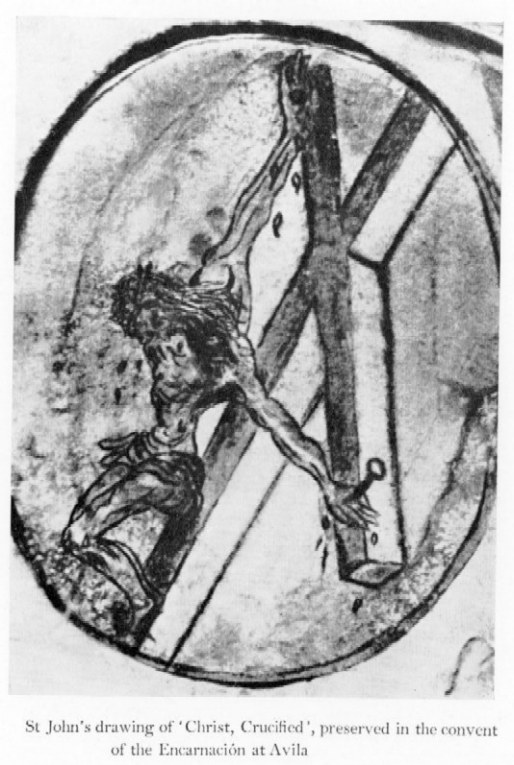
Drawing by St. John of the Cross that influenced Salvador Dali's 20th century portrait of Christ Crucified

One figure we must talk about first though is St. John of the Cross (Juan de Yepes).  John Paul did one of his doctoral theses on him, and knowing a little about him is important because he was such a big influence on TOB.

St. John (1542-1591) was the child of a Spanish nobleman who had abandoned his inheritance to marry a “commoner,” the daughter of a silk weaver.  When his father died young, the Yepes family wouldn’t give any help to the widow and her children.  They lived poor, sometimes on the streets, but John managed to work his way through school and became a Carmelite priest.  He was involved in the reform of that order, a task that led to great hardships for him.  When people, including dedicated Christians, fall into bad habits it can be difficult to change.  Some of his brother Carmelites resisted the call to reform, at one point putting him under what we might call house arrest.  He spent nine months locked in a tinny cell, enduring public humiliations and punishments.  It was during this time that he suffered a great spiritual crisis, as you could imagine, but also a time when he wrote some of his deepest spiritual poetry.  He finally escaped one night and went on to continue his work.

The Catholic Encyclopedia that we find online points out something I found interesting; that St. John, while a master of spiritual theology and Doctor of the Church, was not really a scholar in the usual sense.  We can read Teresa of Avila, his contemporary and collaborator in the Carmelite reform, and a trained eye can see her influences clearly (I’m not talking about my eyes, by the way).  The same could be said of many great thinkers, including John Paul II.  They read a great deal, what they read helped shape their minds and then influenced their own writings.  Out side of Sacred Scripture and St. Thomas Aquinas, John of the Cross seems to have few influences.  His mystical insights are drawn from experience.  In his life he understood suffering and rejection, as well as the joys of friendship in Christ, and most of all union with God.  All this went into his poetry and spiritual writings.  More on this extraordinary Saint and his spirituality next time.     

Saturday, October 2, 2010

Don Bosco's Relics Tour, Take Three: St. Patrick's Cathedral

A portion of the crowd last night at St. Pat's (photo by Joe Gast)
Without getting too caught up in the small details of all that went wrong with the trip, like the buses getting to the Parish 45 minutes late, and the bus driver not knowing how to get out of Elizabeth nor the proper geographical coordinates of the Island of Manhattan in relation to New Jersey, I'll just say I was sweating a bit.  The natives were getting a bit restless, and I was fearing a confrontation once the drivers showed up.  But there was no such thing, and peace and love ruled the day as we piled on the cheese buses and off we went. 

Once they figured out where the Turnpike was and that New York is north, the real fun began.  The traffic getting to the Lincoln Tunnel was just a disaster.  I didn't bother looking at my cell phone, because checking the time would have just frustrated me more than I already was.  The time flew, in that way you don't want it to. 

Well, we got into Manhattan, dodged some pedestrians, almost  hit a traffic scooter and rolled up to the north side of the Cathedral and in, just in time to see the prosession stroll by in all it's glory.  So I found a seat and enjoyed.  Providence allowed me to say Mass in the morning with the school children, so I didn't miss saying Mass, just I didn't participate in this one, which was a bit heartbreaking enough.

As I looked around, and the cathedral was filled, I was reminded of the article I linked to when I wrote about the Pope.  The author described the crowd at Hyde Park, and how it was so diverse that it left no doubt to why it's called the "Catholic" Church. It was the same way here, people of every race, language age social status and ethnic group gathered in union with Christ and brought here by Don Bosco.  There were men in suits, women in dresses along side a man with the Miraculous Medal  tattooed  to the back of his shaved head.  There were nuns in full habit and kids in jeans, high church seminarians in starched cuffs and collars processing to charismatically tinged music that made you clap your hands (courtesy of the Holy Rosary Choir, Port Chester). 

This is the Body of Christ; not always neat and clean, not always what you'd expect, not always what would be accepted in polite society.  It's where the real drama of life is, where the story of Salvation is lived out everyday in the lives of men and women, young and old, trying to find meaning in a world that more and more is telling them that there is none.  So they come to venerate the relics of Don Bosco, not because they have any magic, but because they remind us that God takes the poor and the marginalized and puts them at the center.  This is what He did with Don Bosco, the son of a tenant farmer from the sticks.  We can be close to that, to touch that and gain inspiration from it.  Oh yeah, and since the Saints are alive, not dead, in that great Communion we are all a part of, ask their help on our dramatic journey toward heaven.  

The Archbishop was again outstanding, hitting on and expanding the themes from the day before.  We were challenged to dream, to reach out as the Church to the poor, the unborn, the immigrant, all the marginalized.  Then he reiterated the three great devotions of Don Bosco: devotion to the Eucharist, to Mary, and loyalty to the Pope. 

As Mass was ending I went to the back to meet up with the procession and a couple from Argentina asked me what was going on, since they couldn't speak English.  I told them about the relic and the tour, and the woman was amazed at the singing and clapping and the applause from the crowd at the words of the Archbishop.  "We would never do this when I was a child.  The Masses back home are solemn.  Knowing people from Argentina I found that hard to believe, but I went with it.  All I could say was, "We're Salesians, we celebrate."  She wasn't disapproving, by any means, just taken aback. 

As the procession went by I greeted my confreres in line.  As with Stony Point the day before, I ran into people I knew (one always does at things like this)  So another Latin American tourist standing nearby turned, and in all seriousness said, "you are famous? all these priests, and the others know you." I said "No, I'm just late."

Like I wrote, I would have much rather concelebrated the Mass, but maybe there was a reason for being late. These are the first raw reflections.  I'll offer something a little more "cleaned up" this week.

Friday, October 1, 2010

Don Bosco's Relics Tour, Take Two Point One: St. Patrick's Cathedral

Literally just got off the bus and grabbed some leftovers out of the fridge, and am about to collapse.  But I did want to get a few preliminary thoughts on the nights events down.

It was the second straight day where what could go wrong did go wrong and it didn't really matter.  Mostly it was the buses.  The good thing is we filled two of them. The bad news is they were 45 minutes late getting to the parish.  Then the lead driver couldn't find her way out of Elizabeth, and then wasn't sure which direction Manhattan was, north or south (no, I'm not making this up).  Then the traffic to  the Lincoln Tunnel was what one would expect on a Friday night during rush hour.  So yeah, it took close to 2 hours to get to the Cathedral.  We walked in the doors as the procession was starting, so no I didn't get to concelebrate the Mass, which was a loss, but opened up some amusing observations I could only have made on "ground level," which I'll share in more detail in the next post.

Let's just say, the Cathedral of St. Patrick was the Oratory of Don Bosco on this night, and it's not over.  There are programs going on all night.  For those who know what I mean by oratory will understand what went on.  And again, I'll put  more flesh on this tomorrow.  But for now, all I have to say is; VIVA DON BOSCO!

By Request: Baseball


I wrote a post a few weeks ago thanking everyone for visiting the blog, and asking for suggestions for future topics.  I got exactly one comment; from Padre Steve Leake, suggesting Salesianity, God and baseball.  Well, I have tried to ramp up the Salesianity a bit and getting people closer to God is the point of this whole exercise, so that leaves baseball.  As the playoffs are just around the corner, I'll give my take on the current situation.

I follow the Yankees, which comes as no shock to anyone who knows me, and I try to keep up with the rest of the league.  But this season the it's been tough to do that, what with assignment changes and relics and the like.  Imagine my shock when I saw the Cincinnati Reds won the NL Central for the first time since I was in practical training.  Having lived three years in the Queen City by the River, I can attest that it is a great baseball town when the Reds win (unlike Tampa who can't ever fill their park, even for what are the most important games of their season).  As frugal Mid-Westerners they're not going to pay to see a dog, but give them quality and they'll come out.

As for my Yankees, I think they have as good a chance as anyone of making it out of the AL.  That said, I think any of the teams in the mix has a chance.  The Twins are in the worst shape, in terms of injury, so I guess you'd have to put them lower than the rest.

But once they make it out, what ever team gets to the Series from the AL is going to have to face the Phillies.  And this is not 2009.  Last year they tried to make it with one solid starter and three maybes.  This year they're loaded for bear, and even though Hamels' and Oswalt's win-loss records are so so, their era's are more than solid.  The Yankees made it on three starters and a solid bullpen last year.  Now their rotation is much more vulnerable, and Mo hasn't been Mo (something he usually reserves for meaningless games in April).  If the Phillies had just one more reliable starter against the Yankees the '09 Series would have gone 7, and then who knows.  Game seven is always a gamble.

So as of now, the little boy fan in me says Yankees all the way.  But the grown up prognosticator says; don't bet against the Phillies to make it 2 titles in 3 years.

Thursday, September 30, 2010

Don Bosco's Relics Tour, Take Two: Stony Point

Archbishop Dolan and Fr. Steve Ryan at the Marian Shrine with the Relic of Don Bosco today
(Photo by Mary Kate Havranek)
I packed the monks into the Hyundai this morning around 9:15 and headed north up the Garden State to get to the Marian Shrine for the youth rally and Mass with Archbishop Dolan.  The trip was fraught with delays due to the rain and construction on 78.  When we did get to the Parkway the traffic was only a little better through the Newark exits, with the rain going from a drizzle to a deluge then back to a drizzle the whole way.  After almost and hour and a half we got to the Shrine and I had to negotiate with a fireman over where to park.   After a brief misunderstanding he let me park a lot closer than I expected.  I must say I felt up, despite the rain and the uncertainty over where this Mass would be, since it was obvious that doing it out doors was not going to happen.

There were students from Salesian High, Don Bosco Prep as well as a slew of other schools present, and various pilgrims from far and wide.  My guess is there were in the neighborhood of two thousand people, but I'm not good with estimating these things.

I ran into a few teachers from New Rochelle, and then a ton of students over the course of  the day.  It's only a few months, but I didn't realize how much I miss the Salesian High Boys.  I'm happy here in Elizabeth, to be sure, but it was the first time, seeing the teachers and students, that I felt a bit nostalgic. It was a blessing to get to work with and for them the past three years.  One of the many blessings I've received as a Salesian.

I found my way to Fr.  Lamagna Hall, where priests usually vest for Mass and found the Archbishop holding court amidst the priests gathered.  Fr. Jim Mulloy, the pride of Merrillville, Indiana, let me know that Mass was canceled and that they'd bring the various school groups into the new church in shifts to venerate the relic and hear the Archbishop speak.  

Archbishop Dolan was great, as usual.  He was very enthusiastic in a way that can't be faked.  This is the second time I've seen him with a gathering of young people, and he just has a natural way with them.  He tells it straight, but always with a positive, life affirming message.  He challenged us, young and not so young alike, to "dare to dream" and to put God at the center of our lives.  He spoke of his devotion to Don Bosco, that goes back to his grade school days in the 1950's and his teacher Sr. Mary Bosco, who was actually present at the event.


After we exited to allow the next shift into the church, there was more reminiscing with old friends and then I gathered the monks back and we retreated to a local diner for a quick bite in a dry place before heading back to New Jersey.
 

Obviously it was disappointing that the Mass had to be canceled, but the rain was something beyond any one's control.  Logistically, we (the Salesian Province) simply don't have an indoor space big enough to move an event like this in case the weather doesn't cooperate.  Three years ago it was the heat when the Rector Major visited, this time around it was the rain.  At this point I have no great pearl of wisdom to offer, other than this was promoted as a pilgrimage, and it is in that spirit it should be taken.  Pilgrimages involve sacrifice and a certain amount of inconvenience to be put up with by the traveler making the journey.  They aren't meant to be pleasure trips, or in this case an entertainment event.  In light of all this I think the organizers did what they could to make lemonade from the lemons they got, visa vi the weather.

So, these are my first raw impressions of the Relic Tour.  More on the Cathedral leg of the tour and a more thought out reflection in the days to come.

Wednesday, September 29, 2010

Don Bosco's Relics Tour, Take One


The next two days are going to be pretty busy, with the relics of Don Bosco arriving and the events at Stony Point and St. Patrick’s Cathedral tomorrow and Friday.  I’ll have my reflections on these days of prayer and pilgrimage over the weekend.  

My first thought is that it’s hard to believe that the day is finally here.  I know that many people have been working hard to make this a reality, and there are some who wonder if this is all going to be worth the time and expense in making the relics tour a reality.  Without questioning anyone’s sincerity, because I don’t, we need to have a bigger vision than just worrying about the material concerns connected with this event.  This is a time of grace, and it needs to be taken advantage of.

Don Bosco is one of the giants of the Faith that no one has heard of here in the USA (at least it seems that way sometimes).  He founded what has become the second largest religious community in the Church, and fathered a wider movement of lay people and diocesan clergy who cooperate with the Salesian mission to the young.  In some cases people have heard of Don Bosco or have heard of the Salesians but don’t know the connection between the two.  This is a time to connect the dots for them, sort of speak.

In the Salesian Family we have a dynamic combination of missionary outreach and Catholic spirituality, the active and the contemplative aspects of our Faith directed toward the salvation of the young.  It’s time to stop keeping our lamps lit under a bushel basket and shout it from the roof tops (excuse me for mixing my scriptural metaphors).  This tour of Don Bosco’s relics is a perfect opportunity to do that.

Ok, off the soap box for now.  I’m off to do a memorial Mass.  More on the relic tour soon. 

Monday, September 27, 2010

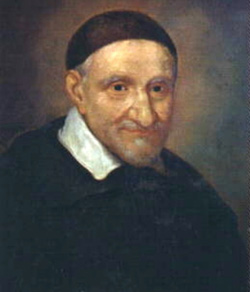
Vincent de Paul

I read three biographies during my retreat this past summer.  They were the lives of saints that I thought would help prepare me for the role I was taking on here in Elizabeth.  One was on St. Anthony of Padua (of course),  the other was St. John Vianny and the last was St. Vincent de Paul, who's feast we celebrate today.

That St. Vincent had an eventful life, there is no doubt; it's the stuff adventure stories are made of. But what fascinated me the most was that if you really think of about, his motives for becoming a priest were less than noble. I'm not saying he wasn't sincere as a young man, but he was just as concerned with the social status and economic security that came along with becoming a priest in the 17th century as with any desire to save souls.  In fact he spent years in and out of court to settle a claim he had on an inheritance that was owed him.  He was not a great sinner, to be sure.  But with all the connections he had made, and lucrative positions he had secured he could have settled for a quiet, comfortable life. 

St. Vincent's conversion didn't happen in a flash, but over time he came to see the needs around him.  He came to understand that the life of a disciple is one of service to others.  Instead continuing in a comfortable life he allowed God's grace to change him, and he became a tireless worker for the poor.  He used those connections, not for his own benefit, but for the good of others.  In addition he dedicated himself to the formation of the clergy, which what notoriously bad at that time.  He also became the father of several religious families, including Mother Seton's Sisters of Charity.

So, yes, St. Vincent could have lived the quiet comfortable life, but then no one would remember his name.